Banjo Fire: Hard‑Driving Bluegrass with Anthony Howell
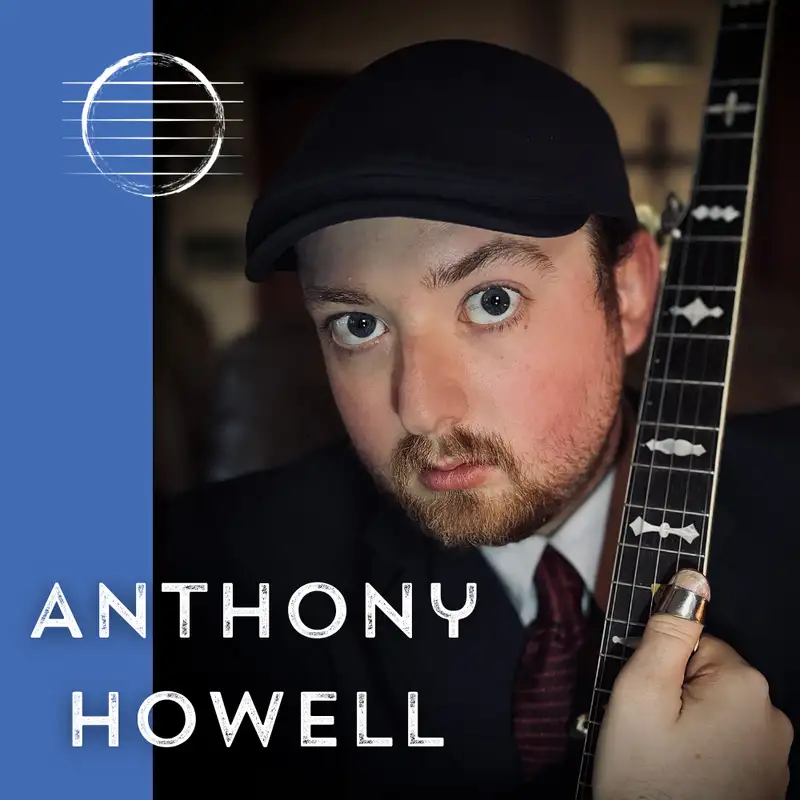
Welcome to The Pluck, a podcast about writing, recording, and playing music for pluck string instruments. Join us for long form conversations with musicians, composers, producers, and educators sharing principles and stories from their real world experience. Today on the pluck, we're hanging out with Anthony Howell, a multi instrumentalist best known for his fiery Bluegrass Banjo work. Raised in small town and based out of Mississippi, Anthony has toured with groups like Williamson Branch, The Edgar Louder Milk Band, Michael Cleveland and Flame Keeper, Daley and Vincent, and Seth Mulder and Midnight Running, while racking up wins at major banjo contests, including the Winfield National Banjo Championship. Most days, you'll find him behind a 1929 Gibson TB three, blending hard driving Scott Vestal and Jens Kruger vocabulary with a modern melodic edge and sharing that sound with thousands of listeners online and on the stage.
Jonathan:Anthony, welcome.
Anthony:Hey, man. How are doing?
Jonathan:Hey. I'm doing well. How are you today?
Anthony:I'm great, man. I appreciate you asking me to be on here with you.
Jonathan:Of course. Of course. I saw one of your you know, in the algorithm, as they say, on on social media on Instagram. One of your videos came up and it just blew me away. And so I'm I'm really happy that we get to chat today about you know, and learn about what you do.
Anthony:Yeah, man. I'm glad that the algorithm is working for me. It's it's taken me a good while to figure out how the social media thing works, but I think it's finally working in my favor for a change. So
Jonathan:so what what have you done differently?
Anthony:I've just been more consistent. You know, back at the beginning of the year, I decided my New Year's resolution was to try to be more present on social media, especially Facebook because that's you know, in Bluegrass, a lot of your following and a lot of your festival promoters use Facebook more than anything. So and and so at the beginning of the year, I had, like, 5,800 followers. And and so I don't have any crazy viral videos, so it's just been me trying to to work as hard as I can. And and so within the month of January, I doubled my Facebook following.
Anthony:Now I have about 12,000 followers, and I've I've doubled my Instagram following, which was almost nothing. But it's it's a slow but steady race. You know? The the consistency is what's done it for me. And I guess sort of leaning into what the the media likes, you know, playing Foggy Mountain breakdown and Rocky Top.
Anthony:You know? That's what gets views. You know?
Jonathan:Yes. So playing playing like hits.
Anthony:Yes. Very very popular recognizable tunes is is what it'll do. You can play some some of the craziest stuff on the banjo, and it'll get, like, 500 views. But as soon as you play Rocky Top, it's gonna hit a 100,000 guarantees.
Jonathan:So so you don't always have to shred?
Anthony:No. Not always. No. If if anything, you can shred too much. You get all these you get all these people on there saying, oh, it's the Harold Schrink's dude.
Anthony:Oh, you're playing too fast. You know? But
Jonathan:Or or nowadays when you're playing too well, they might be like, is that AI? Yeah.
Anthony:You know? Yeah. There's been a lot of people that have said it's fake. There's one video where I posted on Instagram. It's got almost a million views now where I'm using my tuners.
Anthony:They're called detuners on the BandJam.
Jonathan:Oh, I did see that. Yes.
Anthony:And there's been dozens of people saying that's fake. You can't see his right hand, so you know he's faking. Oh,
Jonathan:It do do you have that on this banjo?
Anthony:I do. Yeah.
Jonathan:Okay. Can you demonstrate what what you're talking about?
Anthony:I can. So it it was an invention of Earl Scruggs. Back in the day, he had a tune called Earl's Earl's breakdown. And he on the recording, he had the idea to tune his second string within the song, but he didn't have these special tuners. He would just tune the tuner without having any stops in it.
Anthony:So if you go back and listen to the old original recording of Burles breakdown, you can hear him use it, and he's going completely out of tune.
Jonathan:But it
Anthony:was a cool idea. So later on, he had somebody come up with a device where he drilled into his his banjo, and it would stretch the string. And so it was like a separate tuner. These are what's called Keith tuners. I don't know if you can see it on the camera.
Anthony:It's got little screws. And those are stops. When you it's got a black one and a silver one. If you turn the silver one, it keeps it from going any further down, and the black one keeps it from going any further up. So my second string is a b.
Anthony:I'll turn the the black screw, and then I'll turn it down to an a, turn my silver screw. So that Earl's breakdown in the middle of the song. So that's that's a simple a simple explanation of it, But I have four of them. So I have the ability to play songs using all four tuners if if my hand can get in the right spot. You know, it's it's a little bit tricky and weird timing sometimes.
Jonathan:Right. And this is this is on your Gibson. Right?
Anthony:It is on my Gibson. Yeah. I've replaced I've got the original tuners from 1929, but I've just replaced all of them with these because not only are they cool, I can use them for different things, but they're great tuners. Like, they stay in tune. So I still have all the original parts for it.
Jonathan:Oh, that's a that's such a cool sound. That's such a cool sound with the and and that it's so in tune when you when you get to pitch.
Anthony:Yeah. It stays in tune.
Jonathan:That's amazing.
Anthony:Yep. The the other the other struggle is when you use all four of them, you know, as as a musician, most people will know when you turn when you tune one string, the rest of them are gonna go out ever so slightly. And the banjo is more sensitive to that because I don't really know why. Maybe it's because the neck is smaller and it's more sensitive to tension change. But if you use all four of them, you're gonna have to work with it for, like, a good five minutes to get them all to the right pitch because it's so sensitive to the pitch change.
Anthony:You'll you'll think you have it set right, and it's gonna screw everything else up. So it's it's it's a little bit of a learning curve to figure out how to make them work right. And I'm still learning how to use them, but it's a lot of fun. The these are actually these key tuners, you can get them off of banjobeacon.com, but I got them from a guy named Dean Meese up in Indiana. He specializes in fixing up old banjo tuners and servicing them and and making them work smoothly again.
Anthony:So a lot of these Keith tuners and other detuners will stop working after a few months. They won't work right. And so a lot of people send their tenders to this guy, Dean Mace, up in Illinois, and they work better than they were when they were new. So all four of these came from him. As far as I know, he's the only guy that that doesn't work like that.
Jonathan:And he said he's he's up in Indiana, is it?
Anthony:In Illinois.
Jonathan:Oh, Illinois. Sorry. And and and so did you have to ship your banjo to him?
Anthony:No. He just sent me the tuners. And I was sent
Jonathan:you the tuners.
Anthony:And I was able to take the whole ones off because they just they're being held on with, like, a nut and a bolt on the top of the tuner. There are no screws in the back of it like a guitar tuner. So I'm just able to take the strings off, undo the screw, take it off, and put those on. I can change all four of these tuners in less than five minutes.
Jonathan:Ah, okay. Okay. Now now since we're talking about the anatomy of the banjo a little bit, tell tell us more about the instrument. Like, what what are different pieces of of it?
Anthony:So this this banjo well, most five string banjos are gonna be relatively the same. You have there's a head. It's it's essentially a drum head. Uh-huh. And then it's it's layered like a drum would be.
Anthony:So you have your tension hoop, and the the white part is is just the head, a tone ring, and then the wood rim, and then a flange that goes around the banjo. And they're held on by these little j hooks. And if you take all the j hooks off, then you can take the banjo apart piece by piece. And and so with with that structure, a lot of banjo players will work on their banjos themselves, so they'll get new tone rings or new necks put in. And so if you take the j hooks off, take the tension hoop out and the head and take the tone ring off, then you can pull the neck right out.
Anthony:It is it you you can completely take this thing apart in under an hour and then put it back together, and it would be just fine. And a lot of Banjo's have what are called arch top tone rings. This is a flat head tone ring. The arch top tone ring Where's the tone ring? The tone ring is you see where the wood rim is at?
Anthony:The little piece of wood that goes around?
Jonathan:Uh-huh.
Anthony:The tone ring is right on top of that. It sits on top of the wood rim.
Jonathan:Ah, okay.
Anthony:And and so they have flat head and arch top tone rings. The arch top tone rings tend to be more, I guess, brighter, ten year sounding. You know, you you hear how this banjo sounds. The arch top toner ring sound like if I was to play back towards the bridge, smart 20, you kinda, if that makes sense.
Jonathan:Yes.
Anthony:And then, like, the old Gibson's, they had RB banjos, and they had TB banjos. This one is a TB. And what that means is this banjo from the factor was a tenor banjo, a four string tenor banjo. And and later on, somebody put a five string neck in it for Bluegrass, and it also used to have an arch top tonering in it. So I still had the original neck and the original tonering at the house, but that's why this is a TB.
Anthony:Even though this got a five string neck in it, it was originally a tenor banjo, and it was a style three. And the three is basically the inlay pattern. All these Gibson Banjo has specific inlay patterns for the different models, and it's mahogany. You know, a lot of these Banjo were mahogany or maple or walnut. So these style threes had this specific called leaves and bows inlay and a mahogany neck and resonator.
Jonathan:Beautiful. And how did you how did you decide on this particular banjo?
Anthony:Well, the these banjos from 1929, these style threes had what was called a fat rim, the wood rim. During that time, they made the rims a little bit fatter. Don't know why. A lot a lot of the stuff Gibson did back in the day, nobody really knows why they did it. You know, they would have a style three with a different inlay pattern and, you know, a lot of times they would just throw stuff together.
Anthony:Mhmm. But these fat rims sound different. They almost sound bigger. The Banjo sound bigger. Like, there's there's more meat to it even though they're bright.
Anthony:Mhmm. And so this was a banjo that I wanted for a long time. I've only had it for about three months maybe. I I saw it come up for sale, and the guy named Jim Britton had it for sale on consignment. And I saw it on Sunday.
Anthony:On Monday, I made arrangements to get it, and I immediately sold two banjos, like, that day. And Mhmm. And I drove up to Nashville from my house, Mississippi, and picked it up Tuesday. It's about five and a half hours. Went over and picked it up and drove straight on.
Jonathan:And how long ago was that?
Anthony:That was the day before Christmas. So
Jonathan:Wow.
Anthony:So it's been just about three months.
Jonathan:What a Christmas present.
Anthony:Yeah. I'm telling you. Yeah. And and and the nice thing was, you know, these banjos aren't aren't cheap. So, you know, a lot of musicians wouldn't be able to afford them.
Anthony:Fortunately, I had banjos, like, piled up that I had won at contests. So I was able to sell the Banjos to afford this, so I don't really have that much money in it.
Jonathan:Gotcha. So kind of an even trade.
Anthony:I would think so. Yeah.
Jonathan:Yeah. Very cool. Very cool. Well, let's let's back up a little bit, Anthony. Sure.
Jonathan:Where when did you start music?
Anthony:So I started playing music. So it's a little bit fuzzy because I my dad's my dad tried to teach me guitar when I was probably 10. And I was a very small child, so the guitar when I was when I would stand the guitar up on its end, it would be as tall as I was. So I had a hard time playing it. Then eventually, said I wanted to learn something else.
Anthony:He had a mandolin lying around that I ended up learning from a Mel Bay DVD. It would it would it would show, like, two finger chords and simple melodies like Red River Valley and grandfather's clock. You know, old folk songs, basically. The the mail the Mel Bay DVD didn't wanna pay for copyrights, so they would use a bunch of public domain stuff. So which I can't blame them at all.
Anthony:So I learned everything on there. And then mom and dad were like, we need to we need to teach you we need to get you some actual lessons to get to the next level.
Jonathan:Mhmm.
Anthony:And so we found a man named Alan Sibley who was an established musician of his own right playing Bluegrass festivals around the circuit. And now he has his own TV show on RFD called The Bluegrass Trail. He he fronts the band Alan Sibley and the Magnolia Rambler. Anyway so I was 11 when we met Alan, and I started taking manual lessons from from him when I was 11 years old. That was right before my twelfth birthday.
Anthony:And
Jonathan:Okay.
Anthony:So I took about a year's worth of mandolin lessons from Alan, and then I started playing the guitar. I picked the guitar back up, and I took lessons for about six months. And and then I decided I wanna learn the banjo. So Alan had an old banjo that belonged to his father that he let me borrow because I didn't have one. Uh-huh.
Anthony:And so I I would use his dad's banjo and take it home and practice, and and I I took banjo lessons for about a year and a half. Eventually, Alan got some guys together because my family couldn't afford to get me a good banjo. He he got some guys together and raised enough money to get my first my first Gibson banjo. Oh, that's amazing. So I I had a really good really good support system back at home.
Anthony:You know, Alan, you know, it's not something he ever would've done for necessarily anybody. You know, Alan probably had 60 to 75 students a week during this time he was teaching. And I was the only one that really ever took to it, like, wanted to do it professionally, I guess.
Jonathan:Mhmm. And so where was he teaching out of?
Anthony:Where was he teaching? Out of French Camp, Mississippi. It was about forty five minutes from the house. But he what he would do, he would go to different locations every day of the week. He would teach Monday through Friday Unless he was playing a show somewhere, then obviously, he'd have to move some things around.
Anthony:But, anyway, on Monday, he'd be maybe in Carthage, Mississippi, and then Tuesday, he would be in French Camp, Mississippi. And and so he would travel all his different locations every week to get to all of his students. And so that's where I went every Tuesday for for, like, three or four years as French Camp.
Jonathan:And and so your parents drove you there?
Anthony:They did. Yeah. Eventually, I was able to drive myself when I got when I got my license. But for the most part, they they drove me there every week. Because I I got my license late, so there wasn't there there wasn't much me driving myself.
Jonathan:Gotcha. So you started when you were 11. That's around, like, middle school. Right? Like, grade or so?
Anthony:Yeah. I've been around sixth grade. Yeah.
Jonathan:Okay. And did they have anything in your school regarding, like, these instruments? Because you usually, you don't see yeah. You never see mandolin or or banjo in the schools, maybe guitar sometimes. Was there anything in school that inspired you?
Anthony:Actually, I was homeschooled. So I never had to worry about the instruments or if if I had time to practice because I was at home. You know, I would I was so excited about music. I'd I'd go in there and get my schoolwork done in an hour just so I could go practice. You know?
Anthony:Yeah. But and because my dad, he had a mandolin. He'd he told me the story about how when when I was little, probably the toddler, he wanted a mandolin. And so his my mom got him a mandolin for his birthday, and then he never touched it. And he said to that day, he never could explain why he wanted one.
Anthony:But he he he he chalked it up as divine intervention because I ended up learning it after that Madeline sat there for ten years. You know?
Jonathan:Did your parents play any music, like, the house? Like, bluegrass music and whatnot?
Anthony:No. I wasn't introduced to bluegrass until I started learning from Allen. My my dad played guitar. He he played I guess it was kind of a cross between classical and folk. It it was it was different.
Anthony:He had his own style. He played classical guitar, but he used all five fingers instead of just four. He would use his pinky as well.
Jonathan:He would pluck with the pinky.
Anthony:He would. And I don't to this day, I don't know how he did it.
Jonathan:But
Anthony:but he would do that, and he was a songwriter. I always considered him to be what you call a serious amateur because he always wanted to do it for a living, but he didn't really have the know how to go do it. You know, his his style wasn't marketable, I suppose. Mhmm. But he loved it.
Anthony:You know? He whenever I started playing music, he he just decided that he was gonna live vicariously through me because I was doing what he wanted to do. You know? And and and he was happy to see me out there doing it. Said if he couldn't do it, he was he was glad to see me doing it.
Anthony:You know? So
Jonathan:Oh, that's great. That's great.
Anthony:It was it was it was good to have that support system. And my dad being a musician, he definitely wanted me to be successful as as I could be. You know?
Jonathan:Yes. Certainly. Do you have other members in your family that play?
Anthony:My dad was the only one. I think my uncle on my mom's side might play the saxophone, but there's nobody in my family that is musically inclined. I'm the only one, which is another kind of crazy thing. I don't know how that happened. I think my great great my three greats grandfather played the banjo.
Jonathan:Oh, really?
Anthony:Back in around the civil war time, probably around 1860, 1870. You know? Right. But other than that, I don't there's nobody in my family that had any interest in traditional or folk music or bluegrass or anything like that.
Jonathan:So you said you said that you started on mandolin, tried out guitar, and then settled in banjo. Is is that right? Yeah. Is that the sequence?
Anthony:That's right.
Jonathan:And so how did you settle on the banjo?
Anthony:I think it mostly had to do with how much of a challenge it was. You know, I was I've always been the type of person that if it's if it's hard, if it's difficult, I'm gonna do it because I'm not gonna let it show me up. I was very determined as a child no matter what it was. If somebody says you can't do that, watch.
Jonathan:Yeah. Like, I'll you that.
Anthony:Oh, yeah. Oh, yeah. I was definitely that kind of that kind of child. You know, there's still a little bit of that, but not nearly as I'm not as stubborn as I used to be. But I guess Alan had told me I mentioned learning the Banjo, and he said, I don't know if you wanna do that.
Anthony:It's gonna be hard. And I said, well, dad decided it. I'm gonna learn it now because you said that it's hard. And I'm I'm I'm not gonna say I took to it as easily as everything else. It it didn't take too long to get the hang of the roles, But I I found that I could do things with the banjo that I couldn't do with the other instruments, and that excited me.
Anthony:So that's I think that's what made me settle on on the banjo. Just not not many people know how versatile a banjo can be. If you really sit down and try new things with it, you you'd be amazed at the sounds you get out of a banjo. So that that's what excited me about it the most, I think.
Jonathan:Yeah. So you mentioned a couple things there. You mentioned roles. Now I know what roles are, but can can you explain what roles are?
Anthony:Sure. So the roles are is is is a continuance a continuous sequence of sixteenth notes is is what they are. So a simple roll is is called a forward roll where I'm I'm using my index finger, middle finger, and then thumb, and it's just constantly And so you'll you'll play 16 of those notes within a bar. You know? 16 notes.
Jonathan:But in in threes? You're doing in threes, though.
Anthony:In threes. Yeah. So you're going one two three. One two three. So in in a in a two major bar, you'll be playing 16 notes with three fingers.
Anthony:It's it's weird. I guess syncopation would be the the right term for it. Mhmm. But you have those, and then you have a forward backward roll when you play the same roll and then go back. And then you have what you call an alternating thumb roll is where you alternate your thumb from the third to fourth string.
Anthony:Kinda like the Myrtle Travis style of of finger picking where you're having an alternating, like, bass line. Mhmm. So those are kinda a few simple simple ideas for roles that Earl Scruggs would have used back in the day. And we still use them now.
Jonathan:So so when you're playing, are you thinking of, like, what role you're using, like, in the context of a song, or or is it is it pretty fluid and you're not thinking?
Anthony:It tends to be pretty fluid. You know, if if I'm thinking about what comes next, I'm trying to figure out what the melody is and figure out where it is on on the fingerboard. You know, my my right hand, believe it or not, takes less thought than than the left hand. Now I don't say that to mean the right hand is easy to master because it's not. You know?
Anthony:You you have to practice your the best practice you can do with the banjo is to not you play anything with your left hand and just practice building up dexterity and accuracy with your right hand, making sure you're playing clean. But once you have all of it down, it comes pretty natural. When I'm learning a song, I will I will pretty much just try to figure out the melody on the fingerboard or how it goes, and then the roles just kinda fall through.
Jonathan:Ah, okay. So that's that's interesting. That's a very like, that's a standard approach to the banjo where you have a melody and you surround it with a roll. Right? Yeah.
Jonathan:It's kind of like weaved. There's a, like, a weaving going on. Can you describe this weaving of the melody and the roll?
Anthony:Well, you know, I I I'm trying to think of a simple tune, some something to, like, I'll fly away, the old gospel hymn Uh-huh. Is is a good example of that. Because the first few notes of the melody, I'll probably use my alternating thumb roll, like I said. And then I'll go into, like, a forward roll. So it is it's a combination of different roles, and you're gonna change your role you will change your role depending on where the melody lies.
Anthony:Because for the most part, I'm using that one I talked about, and then I will hit a few strings to kinda reset my role. So right there, I'm hitting both of those strings with my two fingers, and I'm resetting my roll to do a forward backward roll and a forward roll. So it's it's it's like a well oiled machine. Yeah. You know, it's if if if you have a roll that doesn't work, you're gonna be able to hear it.
Anthony:Like, it's not gonna sound right. But I feel like there's a lot of that there there there's a lot of forgiveness when it comes to comes to that. Because you can play a wrong role and get by. That won't sound as good as it would otherwise, but you could definitely tell.
Jonathan:Mhmm. Mhmm.
Anthony:Yeah. So you're right.
Jonathan:What's a what's a wrong role? What do you mean by that?
Anthony:You know, I I wouldn't say necessarily every role would be wrong, but there are things that aren't right. Does that make sense?
Jonathan:Yeah. Sort of sort of like it could be better.
Anthony:Yeah. So, like, if if you use that song again, I'm using the the alternate thumb roll on the first couple lines. But if I was to use, like, a forward roll, like, the melody is all out of place if I use the wrong roll. It sounds weird. You know?
Jonathan:Yeah. Okay.
Anthony:So you can play it like that, but it wouldn't necessarily be right.
Jonathan:Right. Yeah. Then then it throw it throws off the rhythm of the melody.
Anthony:Yeah. It sure does. Yeah. The rhythm, the cadence, the phrasing, everything.
Jonathan:Unless you're doing it for, a special effect. Or
Anthony:Yeah. Absolutely.
Jonathan:Something like that. Yeah. You mentioned something about I think is it you said special effects or something along those lines? You said roles and something else. Was it special effects?
Jonathan:Is that what
Anthony:you said? There's the the banjo is capable of many different things, like being able to make different sounds come out of the banjo that Mhmm. A lot of people haven't discovered. You know, that there's been a couple banjo players like Jens Kruger is the one I mentioned or you mentioned in the intro. Yeah.
Anthony:He came up with this effect that is is a really strange palm muting technique that it sounds muted, but then it sustains at the same time. So that palm muting is normal technique. Don Reno was a banjo player back around Earl Shrugges' time where he would play kind of guitar techniques where he would play use his thumb pick, stuff like that. And he would palm mute to make it sound like it. So that's not a new thing, but what Jens Kruger would do, he would hit the strings with his thumb picks and then pick his hand up.
Anthony:And it would create, like, this weird muted sustained, And he would also move his neck to get, like, a reverb vibrato. So that that's what I mean when the banjo is capable of so much more. I've taken that, and this is something else that people have accused me of being fake on social media. Because I I will use that technique, but then I'll rock my hand back and forth to make almost like almost like a a phaser or a a whammy bar effect. Real bluesy.
Jonathan:Oh, that is so cool.
Anthony:There's there's there's a video of me kinda doing it on on social media, and it is kinda angled like this. So people are accusing me of, oh, he put a bar on there and he's using his hand to hide it. You know, social media, all the people get on there and say all the craziest things. But but that but that's something that I have developed into my own yeah. I don't claim to invent the the palm muting technique that Ian Schrodinger made.
Anthony:But as far as I know, I don't think anybody else has used that, being able to get that sound like a whammy bar. Mhmm. And just silly things, like, can use sound effects. I don't know if you remember the game asteroids, like the little computer game. Yeah.
Anthony:Yeah. So this stupid thing like You know? I just Uh-huh. I I you can tell I was old school. I know too much random crap about the banjo.
Jonathan:You had plenty of time to explore it.
Anthony:I did. I did, man. I I explored so much about the banjo.
Jonathan:So when you really got into the banjo, how much were you practicing?
Anthony:Oh gosh. Man, I would not even just banjo, but there were times where I'd practice eight hours a day. I practiced so much, and it'd be not just eight hours once a day. It was eight hours every day.
Jonathan:Wow.
Anthony:So I I practiced a lot. You know?
Jonathan:So give us, like, an idea. Like, what do you practice for eight hours? Like, what do you go through?
Anthony:Back then, I would practice the things that Alan would teach me whether it be a tune or, you know, at this point, I had the roles down well enough. I didn't have to sit there and just practice roles. It never hurts to do that, but I'd you know, I was I was wanting to learn more more things. So I'd practice songs. I would try to figure out other ways to play these songs.
Anthony:I remember he he taught me a tune called the Blackberry Blossom. It's an old fiddle tune. Yeah. And for the longest time, I only knew one way to play it because it's very melodic. And Mhmm.
Anthony:One of the things I'd practice is trying to learn different ways how to play that. And that and that's that's kinda what helped open up my vocabulary is is sitting down with different tunes and learning different ways to play them. It's helped me develop a lot of my own invention, a lot of my own licks. And it's something I think is important in in today's in today's music world, especially because you've had innovators come through the sixties and seventies and eighties. And and and these days, I feel like music has become stagnant, especially in Bluegrass where there's so many people out there that are that are influential.
Anthony:And these young people like myself don't go out and try to come up with their own things. Like, a lot of these banjo players wanna be J. D. Crow. A lot of these banjo players wanna be Bela Fleck, and they don't go past that.
Anthony:They don't try to do any of their own things. And there's I can't think of another banjo player out there right now that's doing that my age. And the reason it's important is because if you if you let if you let these people influence you to the point that you don't wanna learn anything else, music is not gonna evolve the way it needs to. Mhmm. You know?
Anthony:I I I'm I'm one of these people that thinks that if if if you're playing Bluegrass, there should be an extent to, like, what what even is Bluegrass at this point? You know? You know? The the instrument string dusters is a great example. I love the string dusters.
Anthony:They're awesome.
Jonathan:Mhmm.
Anthony:But a lot of the stuff they play is probably pushing the borders into another type of music.
Jonathan:Mhmm.
Anthony:And I think it's awesome. But what is Bluegrass at that point? You know, where's the line? Mhmm. So I I think keeping in Bluegrass is important for somebody like myself who is actively trying to keep a semitraditional Bluegrass sound alive to still be able to innovate within that, if that makes sense.
Anthony:Yeah. You know, I kinda went off on a Have you found that? Kinda sorry. Go ahead.
Jonathan:No. That's okay. Have you found that line yet? That that line of, like, you know, oh, I'm I'm I'm going too far outside of, you know, where I wanna be.
Anthony:The the the the line for me is, like, when I do contest arrangements, the line for me is I wanna be able to play cool stuff and be innovative while still being able to recognize what I'm playing. And and a lot of that is is still Bluegrass oriented because being one of the best banjo players on the earth, gets into playing, like, a bunch of jazz and classical pieces, and it's all wonderful. But playing a lot of that stuff in a Bluegrass setting maybe doesn't work as well. Mhmm. So I I take a Scott Vestal approach where you have a you have a bunch of cool licks, But for the most part, you can still probably tell what the song is.
Anthony:You know? Or or Baylor would play a lot of dissonant chords and and stuff over a Bluegrass melody. It sounds cool, but is it classified? Would it be classified as Bluegrass? And and I'm not ever gonna say they need to stop what they're doing.
Anthony:Never. Absolutely not. They're doing great, and I love every bit of it. But the the the the line, like I said, between is it bluegrass and is it not, I think is very fine. And it's it's important.
Anthony:Or bluegrass is very a tone based music. Like, if you can't play with good tone, then it's it's not gonna be as good. You know, we don't have a bunch of electrified instruments that can make your tone good. You know? A lot of your tone is in your right hand.
Anthony:Don't get me wrong. But, you know, if you can't if you can't figure that out in Bluegrass, you can definitely tell. So there's a specific sound for having having a good hard drive in Bluegrass sound and and and what a lot of these other Newgrass guys are doing. It is it is a fine line. It's hard to find it sometimes.
Jonathan:Yeah. Are you able to demonstrate, like, what that would sound like? Kind of like, you know, you know, here's Bluegrass, and this is where it's starting to, like, get away.
Anthony:Yeah. So a a fine example, I'll just I'll just keep using I'll fly away because I know it's something everybody will recognize.
Jonathan:Okay.
Anthony:Something that I I would play like a normal melody. So that's pretty normal. I think if I was still gonna play it with my own style and make it interesting, but still have a melody and kinda make it melodic. There's a couple flourishes in there, but for the most part, you can still tell what the song is. And I I I would imagine, you know, just an an example of what some of these other guys do when you're playing that, you might go in somewhere dissonant chords.
Anthony:Oh my gosh. You know, weird stuff like that. So that that's what I mean. Like, what where's the line? Like, what what are you are you playing Bluegrass or, you know, or not?
Anthony:You know? Again, I I don't ever wanna say any of this stuff and people think, oh, he hates Baylor Flag. He hates all these guys. I don't. I love all of what they're doing.
Anthony:But, again, I'm trying to keep you know, Bluegrass is starting to gain popularity again, thanks to Billy Strings. And I'm trying to help keep a lot of that alive and still keep the roots intact Mhmm. And and not play so much, you know, psychedelic stuff, I guess.
Jonathan:Right. Yeah.
Anthony:You know? Because I'm I'm a big I'm a big advocate for, you know, music. A type of music exists for a reason. And, you know, if you're gonna play that music, you should be able to play it right and then still be able to experiment and be innovative to an extent to still call that type of music. Not even just Bluegrass, but anything.
Anthony:Like, country music is another example of that. You know, country music today isn't what it used to be. You know, people like Zach Top are bringing back the nineties sound. He's being innovative while still holding true to what that type of country music is.
Jonathan:Mhmm. I I think that is a a pretty common question or feeling where where it's like, how much are we keeping or how much are we holding in the tradition of that style? You know, where where is that foundation? What is that foundation for Bluegrass? What is that foundation for country?
Jonathan:And and then how can we be innovative without changing it?
Anthony:Yeah. Absolutely. Yeah. Is I think it's important. You know?
Anthony:There there are a lot of banjo players out there right now that are really good. They're my age. But like I said earlier, I I can't think of and and this the stuff this the stuff these banjo players play, I can't think of anything that would make it their own. They're they're all they're all copycats. And and, you know, they are they're talented.
Anthony:They're great musicians. But I feel like a lot of them are underutilizing their talent because they are talented enough to be able to come up with new things, but they're not doing it. You know? So that's why I've I've been trying so hard to to do that myself because I wanna see banjo I wanna see good banjo go in the right direction. And it's gotta change to an extent to to make it move with the times.
Anthony:You know? Mhmm. But it doesn't need to go too far.
Jonathan:This might be a good time to introduce your single that's coming out
Anthony:Sure.
Jonathan:Given our discussion on innovative banjo playing. Sure. Would you would you say your new single has, you know, ideas of that?
Anthony:I would. Structurally, it's it's like a traditional banjo tune. It's it's pretty straightforward as far as the melody's concerned. The chords are a little bit little bit different. But but then I also try to incorporate some of my own modern ideas while still keeping the hard driving banjo idea intact.
Anthony:Mhmm. So I I I like to think that I use some of it, and I'd hope that it comes through and that people enjoy it. You know?
Jonathan:Yeah. Definitely. Now what what's your next single called? What's the name of it?
Anthony:This this upcoming single is called end the end of the line. When I finished writing it and got it got it done and recorded, the ending sounded reminded me of a train falling off the track. So that that's why I call it end of the line.
Jonathan:The end of the line. Very nice. And that comes out what day?
Anthony:It comes out March 30 to to platforms. It's it's already been released to radio. But It's been okay. It's on radio. It's on the platform.
Jonathan:Platform's March 30. And
Anthony:That's correct.
Jonathan:And I believe you said there's a presave link. Is that right?
Anthony:I do have a presave link, and I can Okay. I can get you that if you need it.
Jonathan:Yeah. Yeah. Definitely. Awesome. Well, do you mind playing a live version right now of in the line end of the line?
Anthony:I will do my best. Alright. There it is. Bravo. Made you went out of tune and everything.
Jonathan:That's okay. No one noticed.
Anthony:I hope not.
Jonathan:Oh, that sounded fantastic. That was awesome.
Anthony:I appreciate it, man.
Jonathan:Yeah. End of the line. Man, that that is cooking. That's some cooking stuff there.
Anthony:I'm excited to get this out and let people hear it. You know, I I had worked on this banjo project. Oh my gosh. I started working on this thing at the 2023 after I won the national championship. My idea was to try to get a new Banjo project out there to help to help go off of the win.
Anthony:You know, a lot of a lot of people that I know won the national championship, but nobody knows anything about it because they don't market themselves. And and marketing is everything. If you're gonna try to be successful or not, you have to market yourself. So that was the idea. Well, I ended up getting a gig playing guitar with Seth Moulder at Midnight Run, playing guitar full time.
Anthony:Okay. This this whole year, last year, I toured all over the world playing with Midnight Run. And my idea was, well, I'll play guitar, and people maybe can recognize what else I'm capable of. And the only thing I got all year was, why are you not playing banjo? This is stupid.
Anthony:You need to go play banjo. And and so and one reason I took the gig playing guitar is because I needed a gig at that present time. And I was like, yeah. I can play guitar. It's not a big deal.
Anthony:Mhmm. So when I got the gig playing guitar, I was like, man, I can't do this banjo album because it's really hard to promote a banjo record while I'm playing guitar.
Jonathan:Mhmm.
Anthony:So I ended up just putting it on the shelf and starting a new project. And that album is now done, and now I'm playing banjo again. So I was like, well, I guess I'm gonna do this banjo album now. And and so now I've got this banjo album. It's about finished and gonna be out there.
Anthony:And I now I have my other projects sitting on the shelf, and it's just been a back and forth thing. So
Jonathan:how do you manage like, how are you managing the projects now, like, the multiple ones? Like, do you do you lay out your days, or, you know, what's that like?
Anthony:Not really. You know, I I play a lot of music. Like, during the week with Seth, a lot of times we're playing at the old Smoky Moonshine Distillery in Gatlinburg. Mhmm. We're we're one of the house bands out there.
Anthony:So, you know, I work a lot during the day, and then I do recording here and there. I do session work. You know? I I carry microphones wherever I go because I've got Pro Tools on my laptop, and I carry a a good a good portable interface. And so I record remotely.
Anthony:So I do that. I do social media. And and I now I'm doing Patreon, so I'm constantly writing Banjo tabs and and making videos for my Patreon. And and so it's it's more like what do I need to get done today? And I'll try to get it done.
Anthony:And what what is the biggest priority? I've only been working on this Banjo project again for a couple weeks. Like, it's been sitting on the shelf and I'll just pull it back out a couple weeks ago. So but on the bright side, I had everything almost completely recorded, and I can do it at my leisure because I played all the instruments on the on the track on the album, except for fiddle. I do not need to play fiddle.
Anthony:But it's it's not I never have my day laid out because my schedule is so sporadic. It's just I'll I'll wake up and figure out what I need to do, and hopefully, I'll get it done. You know?
Jonathan:Yeah. Hey. Life of a musician for sure. You know?
Anthony:Yeah. Life of musician.
Jonathan:Yeah. So this banjo project, so end of the line is a single from an album that's going to come out. Is that what it is?
Anthony:Yeah. Yeah. This is from a a forthcoming album that will be called a banjo aficionado. And the the the theme comes from I'm I'm big into cigars and pipes. Like, I'm I'm a big I'm a big tobacco guy.
Anthony:Not cigarettes. I hate cigarettes. But tobacco would like fine fine tobacco. I'm a big fan. So they have a magazine called cigar aficionado.
Anthony:So I was like, boy, it'd be cool to have a theme like that. So so the name of that won't be a banjo aficionado.
Jonathan:Very cool. When when's that projected to release come out?
Anthony:I don't have a set release date for the album yet. I'm working on getting everything put together. Like, this tomorrow, I've got a photoshoot, and then I'm gonna try to have all the graphics done this week so that I can get it sent off and and and get it get all that part done. And then I have to finish mastering. Hopefully, by summertime, I'll be able to get everything released and and have it for sale.
Jonathan:And how much of this are you doing yourself, and how much of it do you do with others? Yeah.
Anthony:I'm doing almost almost every bit of it myself. I've I've produced it. I've recorded it. I'll be mixing it. I'll be mastering it.
Anthony:I played all the instruments. Aside from a couple things, I have one track where I had, I guess, a Bluegrass all star lineup of guests. There's one track that I'll I'll play the song here a little bit. I had Adam Haynes playing fiddle who plays with Rhonda Vincent, Nick Chandler playing Madeline, and Trey Hensley playing guitar. Aside from a couple Excellent.
Anthony:Guess, I I've done everything myself. And then I'm gonna take my own pictures, then and I'm gonna do all my own graphics. And, like, I'm I'm I'm very self contained as far as this stuff goes.
Jonathan:Very DIY.
Anthony:Very DIY. And maybe it's maybe it's because I don't like to spend money, but I I also believe in a high in a in a high quality product. If if I didn't feel confident that I could do it all myself and make it look and sound good, then I wouldn't do it. But I I think I can make it I think I can make it all work.
Jonathan:Yeah. I I think so. I mean, based on what I've heard with the end of the line song, like, you produced that whole thing. Right?
Anthony:I did. Yeah.
Jonathan:Yeah. It sounds fantastic. So let's let's listen to another you said you have another one from your album you'd like to play?
Anthony:I do. The this Which
Jonathan:one is that?
Anthony:Go ahead. This one's gonna be a ground speed. It's it's an Earl Scruggs tune that I arranged for contest. This was one of the tunes that I played at Winfield. So I will I I have the whole contest arrangement on the album.
Anthony:I have, you know, fiddle breaks and and guitar solos and everything. But
Jonathan:Uh-huh.
Anthony:The way I'll play it here will be how I would play it in a contest.
Jonathan:Okay. Sounds good. Ground speed.
Anthony:There it is. Bravo. Damn. Wow. I had a I a very bad mistake happen.
Anthony:I hope that I played it off.
Jonathan:Oh, again, like like the first one, you were we didn't know you're out of tunes. We didn't we're not gonna hear the mistake.
Anthony:Oh, man. Hopefully hopefully, it doesn't come through. I definitely noticed it.
Jonathan:You know, that's the craziest thing, you know, about being a performer. We're so we are so self, like, critical. You know? And every little thing kind of gets to us, and we hear it. But most of the time, like, no one else does.
Jonathan:It's like
Anthony:That's very true.
Jonathan:Yeah.
Anthony:Yeah. And we are our own worst critic all the time.
Jonathan:Oh, all the time. All the time. And that's definitely like a a hump to get over it. Do do you felt like you do you feel like you've ever had to get over that hump of, like, this self criticism and just kinda let it go?
Anthony:Yeah. Is there's a lot of I don't care. You know? It just is what it is. You know?
Anthony:I I care. I care a great deal because I as a performer, I wanna be able to put on the best show and give my best product to the consumer. But, you know, a lot of things you have to let go. You can't be hard on yourself because if you were, then you'd be miserable because you you you'll mess up a lot. You know, I could probably think I could probably count on both hands how many perfect shows I've ever played out of the thousands.
Anthony:You know? Right. Yes. It's you just have to not worry about it. I'm very I'm a very unbothered individual.
Anthony:Like, there's not much that's gonna bother me, so I just I'll let it go. It's not a big deal. Mhmm. Hopefully, nobody got it on camera and puts it on YouTube. You know?
Anthony:Right.
Jonathan:Right. Yeah. Yeah. So, you know, we we just gotta let it go sometimes. And
Anthony:Yeah, man. It's just not a big deal.
Jonathan:You know? And and that's that's really the nature of being human too. Like
Anthony:That's exactly right.
Jonathan:These things are gonna happen. Like, even the best players will mess up a little bit. And, you know, sometimes we won't even notice. And, you Yeah. And sometimes we do.
Jonathan:And it's just it's just being human.
Anthony:You know? Why it is.
Jonathan:Yeah. I wanted to talk a little bit about this ground speed piece. That was amazing. That was so cool. You said you said before you played it that you arranged it for a contest.
Jonathan:Is that right? Yeah. And was this one you played at the Winfield National Banjo Championship?
Anthony:It it is. This was one of the two tunes that I played in my final round.
Jonathan:In your final round. Excellent. Yeah. And is that is that, like, normal for these championships to arrange your own stuff to play?
Anthony:Most of the time. Yeah. You know, there there are few people well, there are lots of people that will that will rip off somebody's arrangement of a song just to try to go win a contest. But I I'm very firm in trying to come up with my own things. Like, when when I'm developing an arrangement to a song, I will refuse to listen to anybody else's version because I don't want any influence.
Anthony:I want it to be 100% my own. You know, there there's a guy out there. His name is Gary Davis. People call him Biscuit. And he is a five time national banjo champion.
Anthony:And Mhmm. He has his own arrangements, and a lot of these younger people that are coming up playing contests or playing a lot of his arrangements, like, don't hear anything original. Goes back to what I was talking about earlier about how people will try to be like somebody, and they don't venture out on their own. Same way with contests. They learn these other arrangements from Gary Davis, and they don't learn any anything of their own.
Anthony:Mhmm. You know, it is what it is. They end up winning contests with them. Mhmm. But for me, it's more rewarding to come up with my own arrangement because that tells me that my style and my ability is what's determining whether I win or not, not just me playing an arrangement with somebody else.
Anthony:It's it's more fulfilling for me.
Jonathan:Yeah. It's your own voice coming through.
Anthony:Yeah. Very much.
Jonathan:You said this was an Earl Scruggs tune?
Anthony:It is an Earl Scruggs tune. Yes.
Jonathan:So he has his own way of playing it?
Anthony:Yeah. The the, the first time playing through on my version, is is not exactly, but it's really close to how Earl played it. The the the the normal melody being That that's the the the normal melody.
Jonathan:Can can you play the melody again? Like, it's it's it it sounds like it's still surrounded by rolls. Right?
Anthony:It is. Yeah. A lot of banjo tunes are very lick based. So when I say melody, it's rather loosely used. Oh, okay.
Anthony:I'm not a big fan of banjo tune because of that. I'm a banjo player, but I don't think like a banjo player. I wanna hear melodies. And so Yeah. I'm not the I'm not the biggest fan of traditional style banjo tunes.
Anthony:So the melody for this is it kinda takes takes a minute to hear it. So I'll play it, and the the melody is kinda like that. It's kinda surrounded by scales and arpeggios. Okay. So keep keep that in mind.
Anthony:So that's the basic way of playing. And and a lot of a lot of people, what you'll hear, especially when my version comes out, it'll be the next single off of the album. The the way people normally play it on a fiddle or a guitar is gonna be a scale like that. So it's it's still kinda got the same idea, but it's it's much more melodic, which is my my second break was more like that, a scale. You know?
Anthony:Now
Jonathan:that wasn't like a linear scale. Like, you're not playing, like, a lot of notes adjacently on the strings. Right? You're doing a lot of overlap.
Anthony:Yeah. It's it's a I'm still playing like like that same scale or close to it, but being melodic is melodic style banjo still sounds like a roll. Melodic style banjo is when you play the exact melody with rolls and open strings. So, you know, eventually, the the scale stops when I let's see. It's going all the way down.
Anthony:But it definitely sounds instead of how how can I describe it? Instead of sounding like a guitar, almost sounds like a harp. You know, a harp has got a lot of open strings. It's got a lot of all the strings are sustaining or kinda like a piano does. Mhmm.
Anthony:That's kinda the same vibe as melodic banjo. Instead of it's it's a lot prettier.
Jonathan:What would you call that other style? You it's not melodic. What is
Anthony:It's just single string where I'm playing
Jonathan:Single string.
Anthony:Like a back and forth thumb index like a guitar pick.
Jonathan:Right.
Anthony:Except in tune.
Jonathan:So so you're playing those those scales with thumb index thumb index alternating.
Anthony:Yeah. With with that one, I was. Yeah. But when I'm playing the melodic, it's the same thing. It it's the same idea, but because I have so many open strings as I'm using rolls, it's more fluid.
Anthony:Like, it flows a lot better
Jonathan:Yeah.
Anthony:Rather than staccato notes, I guess. And there's a place for that, but in this style of banjo, like, in in a contest, you're gonna you're gonna be you're gonna do better playing melodic than you are single string because it's a lot harder. It's it's a lot harder to make something to make something flow and put it all together. You know, a lot of people could come up with something in a single string because it's it's really easy to find the notes on individual string. But figuring out where all the open strings are It's a whole different ballgame.
Anthony:And it's difficult to get the hang of. It is.
Jonathan:Yeah. You have to really get into those patterns and get them Yeah. Like muscle memory. Yeah. Can you talk about other parts of this arrangement that are unique to you?
Anthony:Yeah. Let's see. The the the the biggest probably the biggest thing that makes this arrangement unique to me to me is the second break that I played. The the second part, especially too, when Earl would play the second the second break, he'd play it the second time through. Sorry.
Anthony:I'm trying to get my thoughts in order. He would play the same thing. But when he goes to the b part, on the first break, he would do this. On the second break, the the second time through, he would play the the b part instead of going to that first position. He would go up here.
Anthony:So I I took that and made a continuous roll. I'm using a backwards roll to to to make it flow a little bit better. Going. So that that would be recognizable as as mine. Makes it unique to my style.
Anthony:And I'm I'm I'm doing a backwards roll, and then I'm ending on my full string. And then the next part, I did the triplets. That that there's there's a lot of stuff in that whole that whole section that, I guess, can be recognized as, you know, my own thing. That that this this is the one where, you know, as a kid, I grew up watching YouTube and and watching all these musicians trying to play like them. Well, now I'm finding that a lot of these kids that are, you know, teenagers younger than me are playing this.
Anthony:Mhmm. So Mhmm. It's weird to see see the influence, but they're they're doing it. So I guess that would be the one that's recognizable.
Jonathan:Talking about people learning the banjo. Yeah. So little sidestep here. Sure. So, like, what what would you say for someone who's, like, interested in learning the banjo?
Jonathan:Where should they start?
Anthony:They should definitely start learning a few roles, you know, like we talked about at the beginning. And if you are interested in learning the banjo and already trying to learn, please please start using your fingerpicks right away. Because a lot of I've had students that will learn a few things and not wear their fingerpicks, And then you get to the point where you tell them, hey. You need to try to play with fingerpicks because it's gonna sound better. It's kind of a it's kind of a prerequisite that should have happened a long time ago.
Jonathan:Mhmm.
Anthony:And it makes it a lot harder for you later on if you don't start wearing your fingerpicks. I had a student you know, the way you wear your fingerpig, a lot of you already know this, but you wear it where the blade is sitting on the on the other part of your thumb, and it wraps around your thumb. The this one this is one of those ToneSlab new ToneSlab thumb pick. It's got a metal band and a plastic. It's a it's a Torlon blade.
Anthony:But Mhmm. That's that's how you wear it. And so I had this Banjo student that had not been wearing picks, and they said, I don't know how to wear it. And she was like, I just feel like it's gonna fall off, and she was wearing it like this, like, with the blade on top of her thumbnail, and it was upside down. And Oh, gosh.
Anthony:And then I was like, you have to turn it around. And then she was like, like this? I was like, no. And but bless her heart. She just couldn't get the hang of it.
Anthony:So we haven't had a lesson together in a couple weeks because she is actively trying to learn how to use finger picks after not using them ever. Mhmm. So if you're learning the banjo, the two things you need to do right off the bat is learn how to be comfortable with your finger picks and practice your roles. Get build up dexterity in your right hand so that whenever you get to learning songs, it'll come easier to you.
Jonathan:Mhmm. Now for the finger picks, we're we're talking this is called three finger style. Is that what it's called?
Anthony:Three three finger style, scrub style. Yeah.
Jonathan:Scrug style. Okay. Now for placing your right hand, don't you put don't you put your ring finger and your pinky on the body?
Anthony:I do. I'll put I'll try to get closer so you can see. I always place my ring finger in my index and my pinky finger right here. It's it's not too far. Let's see.
Anthony:I don't know if you can see that. I'm right there kind of in line with the bridge. I'm not back here. I'm not up here. A lot of banjo players you see have their pinky on the bridge, and, you know, I don't I don't agree with a lot of that because depending on where you place your fingers, where you place your hand, you're gonna get different tones.
Anthony:And whether you have one finger down, it you're it's gonna change the tone of your banjo as well. It's not much. But if if say, you play your banjo, you don't have any fingers contacting the head, you're gonna get a lot of overtones. I don't know if you can hear it over the camera, but you got a lot of overtones, a lot stuff ringing out. When you place your fingers, it kinda deadens that.
Anthony:It's it might be hard to hear, but it definitely makes a difference.
Jonathan:So it mutes it mutes some of the overtones. It doesn't ring as much.
Anthony:It absolutely does. Because, see, this this banjo head is tuned let's see. It's tuned to g sharp. And so the banjo itself is tuned to open g. So when I'm playing, if I don't have my fingers down, the head is tuned close enough to the key of the instrument that it's gonna have, like, sympathy tones, and it's gonna ring out in a way you don't want it to.
Anthony:So it's important to have your it's important to have your fingers at least one finger placed at all times so that you don't have those crazy overtones, especially with recording. If you have those overcut tones while you're using, you know, an expensive microphone. You know? Right. It's gonna catch all that.
Anthony:It's gonna sound like crap.
Jonathan:It's gonna hear it all. Yeah. Oh, yeah. Your thumb placement. Now I know in classical guitar classical guitar, we keep the thumb to the left of the index finger.
Jonathan:Yeah. Do you do the same thing? Do you keep your thumb to the left side? Yeah.
Anthony:Yeah. It's it's it's it's further up to the to the neck than than the rest of it.
Jonathan:Right.
Anthony:And there there's a guy I was probably 14 years old when a guy told me this. He said, you need to always make sure that your thumb is further up. It's gonna sound better. And it's true because where all these strings are unwound except for my fourth string. And so you're gonna have to play it in a different area to make it sound better, where these these unwound strings sound better closer to the bridge.
Anthony:Not not way back here, but close to the bridge. Where this wound string is fuller sound, then it's gonna sound better playing further up. Oh, it just sounds fuller when I do that. Mhmm. And, you know, and it changes whenever I play back up up the next step, I'll move closer.
Anthony:And then the my thumb is more in line probably with my index finger.
Jonathan:And when you're plucking, do you pluck, like, from the tip joint, or are you plucking from the knuckle? Like, where where where are you swinging the that your your fingertips?
Anthony:I guess I'm I'm I'm bending it at my knuckle here, at my first knuckle, and then I'm
Jonathan:Okay.
Anthony:I'm I'm also I'm I'm bending both my knuckles, I guess. So I'm so when I'm when I'm playing, I don't actually hit it straight on. Like, I'm kinda getting underneath. See the difference? Yeah.
Anthony:The when I do that, it gives me more a more a stronger attack for, you know, good Bluegrass style banjo instead of just playing it. It's sharper.
Jonathan:Yeah. Do you feel like you're pulling the string more?
Anthony:Yeah. I am pulling it more. A 100%. Mhmm. It's almost like I'm reaching down underneath the string and pulling it up.
Anthony:I mean, I'm not, but it's closer to that. And then so it also depends on my hand placement as well because I I don't wear my pick straight, actually. My my hand sits at an angle, so my my fingers are going out this way instead of, like, straight up.
Jonathan:Mhmm.
Anthony:So to compensate, I keep my picks. I don't know if you can see, but they are not straight.
Jonathan:Yeah. Can you put them a little closer?
Anthony:Yeah.
Jonathan:Oh, okay.
Anthony:They're not straight at all.
Jonathan:Gotcha.
Anthony:And that's because, like I said, when I'm playing, my fingers are going in this direction rather than
Jonathan:It's like more diagonal.
Anthony:Up. Yeah. Oblique. So when I do that, it makes it so that my picture hitting straight on, if I was to turn them, well, it feels weird, and make them straight. It's from the tubby side.
Anthony:I'm hit with the side of the pick rather than banjos are so temperamental, but every little thing can make it sound different. Mhmm. And every banjo has got a different way to do it. I'm sorry. Every banjo player has got a different way of playing and and pick hand placement, the way their picture are used.
Anthony:So things work for different people. All this is just what I found works best for me. I get the best possible tone out of all these things. So it'll be different for everybody. But
Jonathan:Yeah. Yeah. It's a combination of things. Yeah. Definitely.
Jonathan:You mentioned earlier about your thumb pick tone slabs. So you're Yeah. So you're working with ToneSlabs to make an Anthony Howell thumb pick.
Anthony:Is that right? We are. We we we are. So ToneSlabs has been around for a few years. They started making picks probably in, probably five years ago, maybe around COVID.
Anthony:Mhmm. And I'll be honest. I wasn't really a fan at first. You know? And they were getting better and getting better.
Anthony:And then they came out with this pick that was made out of this stuff called Torlon. Don't ask me what it is. I don't I have no idea. That's just what it's Yeah. Torlon.
Anthony:I just know that it sounds good. Okay. And and so I started using their flat pick while I was playing guitar with Midnight Run. I Seth had an endorsement with the guys, and it's a situation where, like, if we need something, just, you know, let them know. It'll, you know, help us out.
Anthony:So they're they're great people. So I started using their flat picks. I was like, damn. These things are really good. And then they talked about having thumb picks.
Anthony:And then my my my interest has peaked. My my entire career, I've used blue chip. I've used nothing but blue chip picks. And I'd we played the station in Back in January, we played station in, and the guys from Tone Slabs came over, and they had these new thumb picks. He said, hey.
Anthony:You need to try one. I said, absolutely. And I don't recommend doing this, but I took the thumb pick, and I didn't play with it at all before we went on stage. Now I took it on stage and and played a show. I don't recommend that.
Anthony:That's risky. But Uh-huh. The thumb pick was so good that I performed immediately better with that than than my than my blue chip. And this isn't saying that blue chip is terrible. I love blue chips.
Anthony:They're great. I used them for twelve years. But what's special about these is they're made more like a traditional thumb pick where you can see the blade sits above the band. Mhmm. Like, it points out.
Anthony:With the blue chips, the the blade sits down. Like, it's I don't know how to explain it. I wish I had one here. I'd show you. But it fits like a traditional thumb fix, so I actually get a fuller tone with it than I did with a blue chip.
Anthony:And they're the material is self lubricating, so it never gets scratchy. Okay. It it never it doesn't really wear out. It the the tip is kinda wore out because the head the frosting on the bandage, it kinda wears it out. But as far as actual pick wear, actual play, it doesn't doesn't wear at all.
Anthony:So I like the pick so much. The only thing I didn't like about it was this this particular thumb pick had a pretty significant point on it. And Mhmm. They had that, and they had another one that was, like, completely round. And I was like, I I I went back and told them, so this is what I would do differently just for my personal taste.
Anthony:Because I also finger pick guitar. And my Mhmm. My preferred thumb pick is a Vintage National thumb pick that this relatively the same shape, but it's got a rounder tip on it. Mhmm. And so he said, David Welch, the the main guy the two guys that run tone saves is David Welch and Frank Sullivan.
Anthony:And I talked to David, he said, well, why don't we just start working on you a a signature model? And I was I said, yeah. Absolutely. That'd be awesome. So the the prototype is finished.
Anthony:It's just I haven't got it in the mail yet. It's I don't think they've got it in the mail yet. They they partnered with Banjo's to make the thumb picks. They made the the bands, and then they would send them off to Prucha, which is based in The Czech Republic. And then he would attach the bands to them because he made all the bands that's in the back.
Anthony:So it's it's a point now where they're getting close to being able to assemble things themselves. The the prototype should have been here, like, two weeks ago, but things got behind. And now it'll be here whenever it gets here. I'm not really in any hurry. It's fine.
Anthony:But that's that's what's coming up. They they only just recently launched the thumb picks. I think you can go on the website and buy them, maybe preorder them. I think they finally started shipping them out. Okay.
Anthony:And so
Jonathan:And where where do you where do people find that?
Anthony:You can find that at toneslabs.com. Okay. And you can on their website, they have if it's a preorder link still, it'll send you, like, Shopify. And you can preorder it from Shopify, and then they'll send it to you. But so for all the people, finger pickers, banjo players, whatever out there, I definitely ought to keep an eye on the Anthony Howell model because I I designed it so that it could be the best possible thumb pick for playing banjo or finger picking guitar.
Jonathan:Okay.
Anthony:Doesn't matter what what instrument you play. I tried to design this so that it is the best thumb pick on the market.
Jonathan:Great. That that's great. I've I recently played a I played a musical last October. I played Pearly, the musical, and there's a banjo part in that. And I was experimenting with different thumb picks, and, I really couldn't find one that that felt good.
Jonathan:Yep. You know, I I ended up on, like, the Dunlop. I think it was the Dunlop one, the medium size. Yeah. Mainly mainly because I liked the I liked the weight, the thickness of it.
Jonathan:Yeah. But it still wasn't quite right. You know, there's some issues with, like, the band catching on the strings Yeah. And stuff like that. So I'm excited.
Jonathan:I'll definitely grab one of those tone slabs. Yeah. Check it out.
Anthony:Yeah. That that's something that they also took into consideration with is the band catch going straight. Because blue chip sometimes were were capable of that. And if you're on stage playing and your your thumb pick gets caught, like, it's not just a quick fix. You have to you have to get out of there.
Anthony:Yeah. In in the middle of a solo, it's it can really mess everything up. With this one, they changed they changed the band. You can see the band has got full contact with my thumb. There's not anything sticking out right there.
Jonathan:Mhmm.
Anthony:It is not gonna catch. And the inside of it, the corner right here where the blade meets the band is more of a significant corner, so it's not gonna turn while you're playing. And the inside of the band, I don't know if you can see that at all, But it's it's sandblasted. It's just like a matte finish on the inside of the band.
Jonathan:So the sand grips grips your thumb a little bit.
Anthony:It does. So it's not tight. It's not tight at all, but it's not gonna move around. It's not gonna fall off.
Jonathan:Mhmm.
Anthony:It's it's a great thumb pick. I was blown away when I first got my hands on one.
Jonathan:Oh, that's great. Fantastic.
Anthony:Yeah, man.
Jonathan:I love that. I love that. You know, we are with with just like finding our own style, we have to find our own, like, gear in a way, you know, little pieces of this and little pieces of that that works for what
Anthony:we wanna do. Yeah. Absolutely.
Jonathan:So that's great. Fantastic. I think you have one more song you wanted to play. Is this also from your from your album?
Anthony:Yes. It is from my album. This will be the the third single that I put. I'm gonna put out three different singles at a time just for the sake of trying to get some radio airplay. You know, banjo tunes don't do as well as other songs, and that's fine.
Anthony:You know, I'm mostly putting out this album for banjo players. There there are lots of banjo players out there that I found that like my play, and that's great. I man, I I wouldn't be able to do this if it weren't for the fans. You know? Mhmm.
Anthony:So I'm mostly putting this out there for new music for the banjo players. And if you get radio airplay too, that's awesome.
Jonathan:That's awesome. And what's the name of this one?
Anthony:The name of this one is called Highway 19. It's it it put me in the mindset of, like, Sunday drive. Like, just going down the road is it's it's a nice day, you know, in a in a convertible. It just it's a good feeling tune. And I was where I live in Mississippi is right off of Highway 19.
Anthony:So I was it's it's kind of like alluding to my home state, my hometown, or whatever. A a lot of there's another tune on my on my album that is called I named Sweet Magnolia because Magnolia is is the Mississippi state flower. You know? And I'm I'm very proud of being from Mississippi, you know, because there are a lot of talented people. A lot of famous people came from Mississippi.
Jonathan:Yeah.
Anthony:But a lot of people don't really care. I don't know, I guess. Mhmm. B. B.
Anthony:King, Elvis Presley, Conway Twitty
Jonathan:Elvis Presley, was gonna say. Yeah.
Anthony:All these all these people from Mississippi, and a lot of people don't even know any better. You know, Mississippi is known as the birthplace of American music, and that's that's the reason for it. So I I like to I like my heritage, and I like being you know, letting people know where I'm from. I'm proud of it. You know?
Anthony:Everybody should be proud of where they're from. You know? So this this put me in the in the mind of riding down Highway 19 back at home. So
Jonathan:Alright. Well, take us down Highway 19. Gorgeous. That was beautiful. That was really beautiful.
Jonathan:It's love hearing the I love hearing the contrast.
Anthony:There there's it's definitely not a traditional structure when it comes to banjo. It's it's a lot groovier.
Jonathan:Yeah. And it's so peaceful. I I can just imagine what Highway 19 feels like on a Sunday.
Anthony:It's it's really pretty. You know? Where I'm from Mississippi is back in the middle of nowhere. Like, there's there's trees surrounding the highway, you know, especially in in the early stages of fall. You know, you can imagine all these all these oak trees and maple trees changing colors.
Anthony:It's back with Mississippi is exactly what you would do what what you'd expect.
Jonathan:So So, like, when you were writing this, like, initially, like, where did the first idea like, how did that come to be, the first part?
Anthony:Man start? I'll be honest with you. A lot of the stuff that I write tends to just come to me. I I a lot of times, I can't remember where the first conception came from. I remember when I was working on this album, I do remember trying to force a few tunes.
Anthony:I think I think this is one of them that I that I tried to force. I wanted to have something that was different like this. I I knew the the rhythm, the the the timing that I wanted on it. Like, kinda like the half time, the groovy I don't know what you call it. You know, that I wanted that.
Jonathan:It's got a backbeat.
Anthony:Yeah. It's it's got a really good backbeat. Mhmm. A very significant backbeat. And on this album, this isn't a traditional banjo record.
Anthony:You know, a lot of banjo players in the past will do a bunch of banjo tunes. Like, it it like, shucking the corn, ground speed, fighting that breakdown. Your your average, what you'd expect a banjo record to sound like. That the the tune end of the line is probably the most straightforward or ground speed, I guess, would be one of the most straightforward thing on the album. It's nothing is too out there.
Anthony:Everything is musical. That was one of my biggest things. I want everything to be musical. And but I want everything to be different. Like, there's a slow like, a minor a waltz in b minor that I wrote for the banjo.
Anthony:There's a country like, almost like a country shuffle tune that I wrote. And then I got the end of the line, then I got this this one. So my idea was I wanted to have a very vast variety of tunes on the banjo because I'm trying to push the limits of Bluegrass Banjo, not just not the limits of, you know, banjo in general, but Bluegrass Banjo. Like we talked about before, staying within the genre. I'm trying to make aware of what the banjo is capable of in in the year 2026.
Anthony:I I think I think this will be well received. I hope it is. I just hope people enjoy it. You know? And being able to put out my music, that is my style.
Anthony:I know people might enjoy. It makes me feel good. You know?
Jonathan:Mhmm. No. That's wonderful. That's wonderful. I can imagine it being a nice, like, music video in some way or another.
Jonathan:Do you have any music videos in in the works for any of these?
Anthony:No. No. I don't. I'm just gonna have the singles and then put out put out the music as they're released to radio later on to digital platforms. I thought about trying to do music video, but I've got to a point where I'm just ready to get this thing released.
Anthony:And maybe if something comes later, I wouldn't be opposed to do something later. But right now, I'm just focused on trying to get all the music out there. You know?
Jonathan:Or or other people can use the music for, you know, their reels and Yeah. Stories and stuff.
Anthony:Yeah. Absolutely.
Jonathan:Yeah. Yeah. Will will this be available on the social media platforms as, like, a music option?
Anthony:Oh, yeah. All this will be available. What once they come out to digital, you'll be able to use it on TikTok and Instagram, Facebook, YouTube? Or
Jonathan:I find that the Instant Myspace. Right? Isn't Myspace making a comeback?
Anthony:I Right? Maybe. Who knows?
Jonathan:You know, I I I tried going on there the other day to see my old Myspace, and it's like the the site is so slow. I I couldn't I couldn't get to
Anthony:it. That's crazy.
Jonathan:Yeah.
Anthony:That's crazy. I don't even remember my space to be honest with you. Facebook was my first one.
Jonathan:Oh, fantastic. Very good. Very good. We're I think we're getting to the to to the end here. This has been really, really wonderful.
Jonathan:I wanted to just maybe hear if you got any couple exercises. For those who are learning the banjo, I know I know you're really targeting, like, banjo players.
Anthony:Sure.
Jonathan:Right? Maybe something that you have on, like, your Patreon or something like that. Any exercises or techniques or studies and stuff that, you know, that people can hear now? And
Anthony:You know, I have to think about, you know, targeting the different types of players. You know? As far as beginners go, I cannot stress enough the importance of of making sure your right hands is where it needs to be in practicing your roles and working on your dexterity. One of the best banjo players on the scene right now is a guy who plays with with Ricky Skaggs. His name is Russ Carson.
Anthony:He had a story that he was playing with a man named Audie Bladelock probably fifteen years ago. And he was really into playing a bunch of crazy stuff on a banjo, playing a bunch of melodic chromatic licks. And Audit told him, you need to take your left hand off of the fingerboard and stick it in your pocket. And and so he he used that, and now he's one of the considered one of the most solid banjo players in the world. And so when when it comes to beginners, I cannot stress that enough.
Anthony:Practice your roles, you know, learn your roles and get them down and literally just sit there and work on Sept in two, man. Practice getting your roll done. You you can't do that enough. I mean, you really can't because there's the banjo is so rhythmic and there's so many patterns. It's important that you are consistent with that.
Anthony:So, you know, it might be I don't know if you consider that a cop out answer, but it's No. It's it's the most important thing. It really is. And something that I would I would show some of the advanced players is a technique that I that I came up with is is is where you play a role over, a chord, but you get staccato notes out of it. So I'm playing like a chord in my second position.
Anthony:I will play a backward roll, But I will lift my fingers up so that whichever string I'm hitting is only one ringing out. And it's it it it creates a really strange, a a really cool syncopated effect. I've got a lick that I came up with, and I'm actually gonna be posting on my Patreon soon this lick along with a few other mild signature licks in the near future is is, again, the staccato thing. I played this this position. I'm doing second fret, third fret, fourth fret.
Anthony:But I'm Mhmm. But I'm lifting my my fingers up to get this staccato tone. So I'm going up and going back down. So I I guess what it does, it almost sounds like a single string by using the roll. So it gives me the ability to play what sounds like single string unbelievably fast.
Anthony:You know? It's it's it's it's really strange. Oh, it's it's a recent development, but it makes some cool ideas. You know? Like, say you're gonna play a break that goes around the horn, like, you got your six major two five one.
Anthony:You could play something over that with with starting on your six. So something like that. So you there's there's a lot of different ways you can use it. But this one is just one of one of the licks. It's an easy way to I guess, an easy intro to that.
Anthony:That's something I think some of the some of the players might be interested in Yeah. Being a new a new technique that nobody's used before. So
Jonathan:Do do you have, like besides the link itself, anything like studies or anything that you've created based on these things?
Anthony:I haven't yet because a lot of it is fairly new. Mhmm. I haven't I haven't developed any sort of studies. I've got tabs for a lot of this stuff that, like I said, will eventually go on my Patreon. But I haven't developed any studies yet.
Anthony:It's it's very much a work in progress.
Jonathan:Speaking of the tabs, is that how you learned with the I learned a
Anthony:from tabs. Yes. Okay. Alan, my music teacher, would write out tabs. He would write it all by hand and then and then show me how to read it, and then and then I would I would learn off of it.
Anthony:Eventually, I got tired of reading tabs because I hate reading tabs. I really do. It's I'm I'm very much a visual learner. Like, I learn something a whole lot faster just by watching and listening rather than your reading. I'm capable of it.
Anthony:If I need to, I can. But I prefer to I'm I'm very much trained by ear. I can learn a lot faster by ear than I can with the tab.
Jonathan:Which is pretty common in the Bluegrass world. Right?
Anthony:It's very common. Very common. Most people in Bluegrass cannot read music like myself. I cannot sight read. I I know music well enough so that I could I could sit there and dissect it, and eventually, after about eighteen hours, I might complain the song.
Anthony:But I can't I can't read music well enough to to to sight read something. Mhmm. Very much hands on by ear. You know, my my boss, my band leader, Seth, he asked me last night. He said, can you practice in your head?
Anthony:I had to think about it. And, yeah, I'd I'd I'd I'd very much am thinking about things, learning by ear. It's all in my head most of the time. I can write tunes, like, whole whole songs from front to back in my head and then turn around and play it on the banjo. So I that that that style of learning just works best for me.
Anthony:I don't have a problem with tabs, and most banjo players prefer it, which is why I offer it on my Patreon.
Jonathan:Mhmm.
Anthony:Otherwise, I would just slow it down and break break things down. But Mhmm. I I don't have a problem writing it. I just don't like reading it.
Jonathan:Yeah. Oh, that's interesting. That's interesting. It's but it's it makes it makes perfect sense just the nature of the style of the instrument historically.
Anthony:Yeah. You
Jonathan:know? You know, it's such a it's an art form passed down by oral tradition.
Anthony:Yes. And Very much is.
Jonathan:So lots of listening, absorbing, maybe imitating Yeah. Stuff like that.
Anthony:Yeah. There's a there's a lot of listening. Even in a Bluegrass band setting where, you know, your your main rhythm section is a rhythm guitar, a bass, and a mandolin. A mandolin that takes place like a snare drum. You know, it plays the offbeat.
Anthony:Mhmm. So there's a lot of listening for you know, maybe a mandolin wants to take some fills and play backup over verse or something, then a mandolin or a fiddle might chop. Or if there's no fiddle, then a banjo might bump and and play the offbeat. So we're all constantly trying to pay attention to each other and listen. Any and and it's like that with any band, but a lot of times in Bluegrass in in in a Bluegrass band setting, some things aren't planned out.
Anthony:A lot of it is impromptu. So you have to pay you have to pay really close attention and listen close for at everybody else to make sure you're all sounding good and working as a team. You know?
Jonathan:Definitely. Definitely. Just like jazz. It's a lot like jazz too.
Anthony:Absolutely. It is. Yeah. Yeah. A lot of stuff you don't know what's gonna come next, so you better be on your a game.
Jonathan:Uh-huh. Uh-huh. You better be listening too.
Anthony:Yep. Oh, yeah. Always be listening.
Jonathan:Well, awesome. Well, thank you so much, Anthony. This has been such a wonderful time to learn, more about you and to hear you play these songs coming out on, you know, the single End of the Line on March 30, Ground Speed and Highway 19 coming out on your as other singles soon.
Anthony:Yeah.
Jonathan:Very excited to hear those. And we even got a sneak peek today, which is so cool. I I feel I feel honored that I got to hear it today.
Anthony:I'm glad that you're you let me play some of that stuff. You know, like I said, I think people like it. An another song that we all on the album, I don't know if it's gonna be single, but it's something that people look forward to is that I developed a banjo arrangement to Puff the Magic Dragon. And and I I think a lot of people might enjoy that because that's the song from my childhood. Like, I remember hearing that as a kid, and I I think people might be excited about that.
Anthony:So just some different things. Like I said, not your normal Banjo album, but I look forward to getting it out there.
Jonathan:And that's okay. You know, it the album that that says Anthony Howell, That's that's what we're
Anthony:looking for. I wanna just scream Anthony Howell.
Jonathan:Well, sounds good, Anthony. Well, thanks so much for being here today and for being on The Pluck.
Anthony:Yeah, man. And
Jonathan:until next time.
Anthony:Absolutely, man. I appreciate you having me on.
Jonathan:Alright. Take care.
Anthony:Alright. You too, man.